
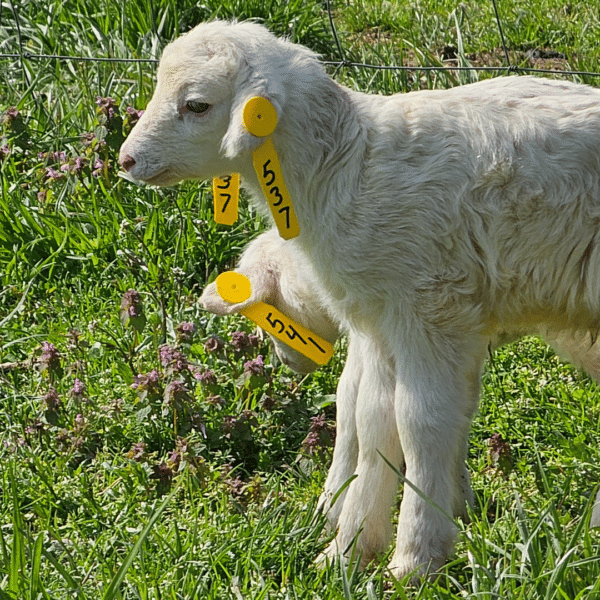
Lambing season is well underway here on the farm and we’ve been keeping a close eye on our “lamb cam” to make sure we don’t miss any new arrivals!
Lambing usually happens in the span of just a handful of days but the lead up and preparation period is many months in the making. It’s always worth the extra effort though to make sure the ewes and lambs are as comfortable as possible, ideally without the need for us to intervene.
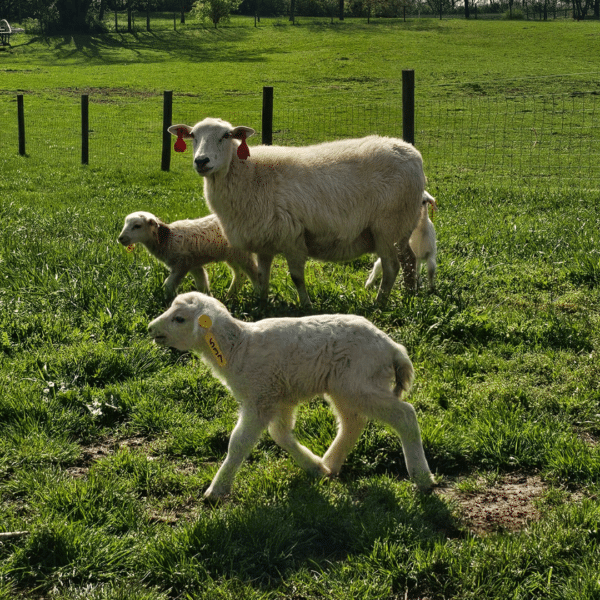
Like all of our animals, the ewes spend their days out on pasture for optimal nutritional benefits (and for the least amount of complications during lambing), though they have access to part of the barn to come in and out as they please. We’ve found that given the option, the sheep prefer to be outside as much as possible, but we always keep the weather in mind and plan our breeding periods accordingly to avoid periods of extreme cold.
In February our shearer Micah come out and sheared our pregnant ewes before they got too big and the wool got too unmanageable. This also makes it easier for the lambs to nurse. Many people ask what we do with our discarded wool; we don’t sell it but it makes for great insulation!
Though we do our best not to intervene we always keep a close eye on things. Occasionally the first time mothers will reject their lambs or favor one lamb over the other if she has twins, and in those cases we like to bring in the ewe and lamb to a sequestered area (called a jug) for a day or two to encourage bonding and nursing. We will also use these jugs to bring in ewes who are having complications with birth. Otherwise, we like to let them go undisturbed and let nature take its course.
Mac and his assistant are checking on the flock multiple times a day and looking for early signs of upcoming births and delivery, and any obvious issues. They also make sure that each lamb is given an ear tag (an important identification for our farm) and any ram lambs are banded. We then note each lamb in our records, which is a requirement of our organic certification, and give them a tetanus vaccine to prevent Tetanus, which sheep are prone to.
There are also times when, despite our best efforts, a ewe will not bond with her lamb in which case we use colostrum in a bottle to feed the lamb. Colostrum is the first milk that lambs ingest after birth and helps them to get the essential nutrients they need before they build up their immune system. Each year we freeze extra colostrum that we are able to milk from the ewes to freeze and then thaw in case of emergencies. We affectionately call these lambs “bottle babies” and while they’re very cute, we hope for the least amount of them possible each year.
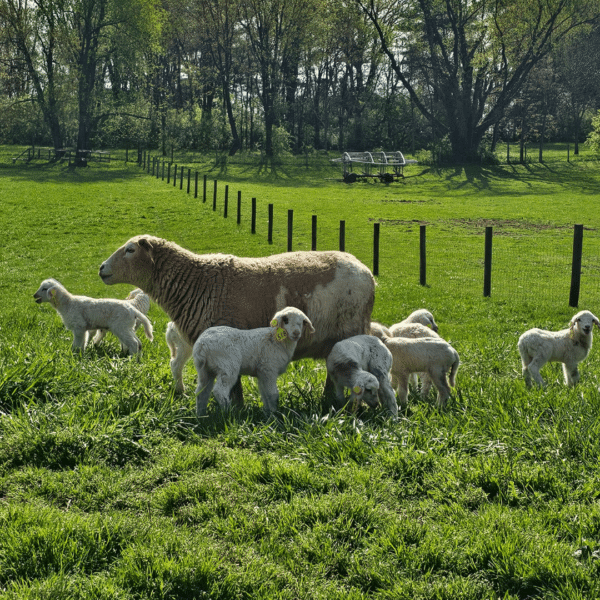
Lambing season always brings surprises, some good and some hard. But observing the natural strength and resiliency of our ewes and lambs is something special we look forward to every year as the next generation of Elmwood Stock Farm sheep takes shape before our eyes.