
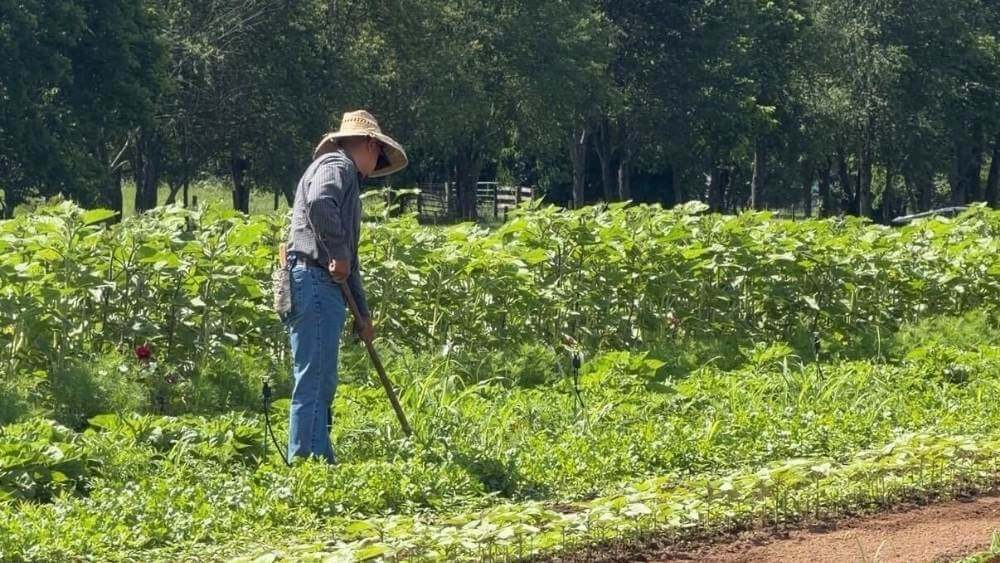
One of our principles is to farm in such a way that is true to how our ancestors farmed: with respect for, and in collaboration with, the ecosystem. New technologies may come about to help us become more efficient and to increase the quality of yields, but they are never at the expense of this principle.
A benefit to the way we farm was discovered in a 2016 sustainability study conducted on Elmwood. The study, led by Matthew S. Deason as part of his Agricultural Engineering Thesis to the graduate faculty of the University of Georgia, measured the farm’s energy return on investment (EROI) for the entire 2014 calendar year. This value is used to determine how efficiently something can generate energy. It’s a ratio of energy gained to energy spent in the process of gaining said energy. This comes up frequently in power generation methods like solar, nuclear, and wind. But one can also measure the EROI of agriculture.
What this study is really measuring is: how much energy it takes to feed people with Elmwood Stock Farm’s farming system.
Energy In
Modern US agricultural practices and logistics systems are energy-intensive, which this study acknowledges. One of the goals of this study was to determine where our integrated crop/livestock farm stood relative to the average U.S. farm energy usage. Currently, modern fossil fuel-intensive farming practices make up more than 15% of the total energy consumed in the entire country.
This study was thorough. All on-farm (and some upstream) energy inputs were measured, and this includes (though not limited to) water usage, gasoline, electricity, human labor, animal feed, packaging, mulch, seed, equipment maintenance, and infrastructure maintenance.

The amount of energy represented by each of these inputs was converted into joules, a unit of energy measurement. How did Matthew do this? By reading electricity meters, measuring gasoline use, calculating how long and how hard our employees worked, and measuring the amount of energy needed to produce a material (such as gravel for preventing roadway erosion).
All that work gets us a number: 3,231 gigajoules. That’s the amount of energy it took us to run the farm for the entire year of 2014. That amount of energy was spent by our operation.
Energy Out
Now, what about the amount of energy that the farm actually generates, rather than uses up? What is our output, and how do you even measure it?
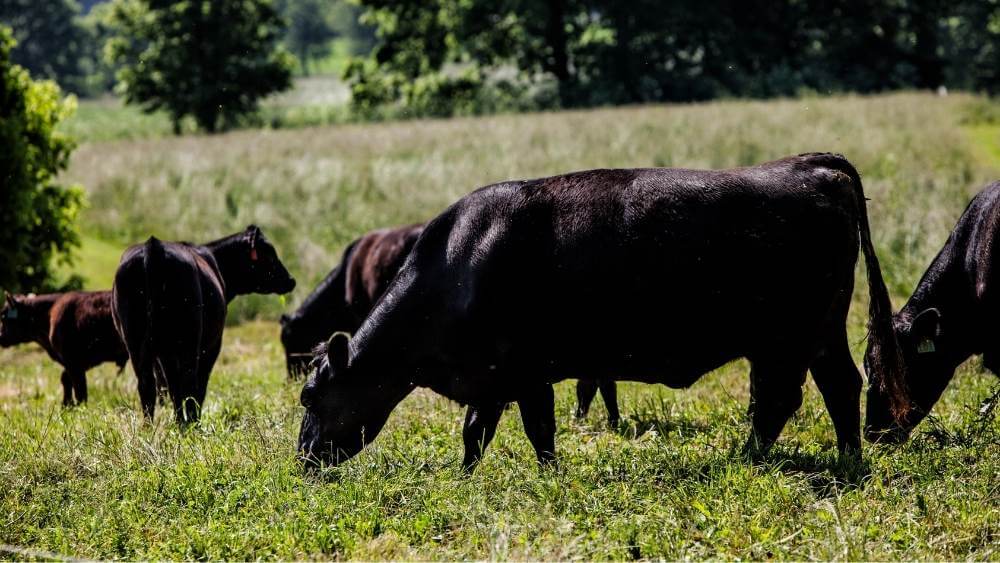
The study found the total number of calories we generated in all of 2014, broken down by product. Each crop or meat item we produced was weighed, and the weight converted into calories per kilogram, based on the average caloric density of that kind of item. Our total output weighed in at 422 gigajoules of meat and vegetables, or over 100 million food calories.
Those calories didn’t exist in edible form before. They weren’t proteins or complex carbohydrates or vitamins that our bodies can process. They were grass, soil, sunlight, water, and seed. Assuming a 2,500 daily caloric intake, that’s enough to feed 110 people 3 meals a day for an entire year.
Naturally, we don’t only feed 110 people. Our products see a wider reach as a portion of our customer’s diets. But still, that’s a lot of food.

So, How Energy Efficient is Elmwood Stock Farm?
The ratio of energy in to energy out was calculated to determine just how energy efficient our operation really is. For comparison, a typical livestock operation in the US has to consume 50 units of energy in order to produce just 1.
By integrating livestock into our vegetable production strategy, lessening our reliance on fossil fuels, and doing more tasks with hand tools, our energy efficiency ratio is just 7.7 to 1. That’s an 84.6% reduction in energy use from the typical livestock farm.
On Elmwood Stock Farm, 1 field worker feeds 9.2 people. While that’s fewer people fed per worker than the national average, this need for more people also creates more jobs. As Deason put it, “the primary purpose of all non-labor inputs in the modern agricultural system is to reduce direct human labor input.” By reducing our reliance on off-farm inputs like fossil fuels, we support the livelihoods of more people and more families.
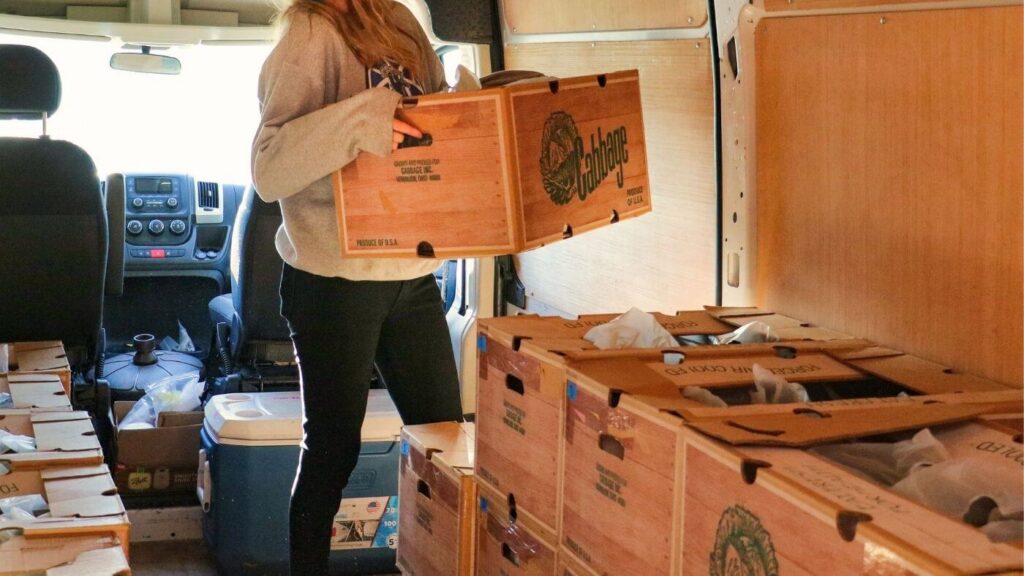
But also, Machines are not the enemy.
The tractor that does highly intensive work on our farm isn’t an inherently bad entity that only serves to make us less energy-efficient. A mechanism like that can actually be more efficient than raising a draft horse from birth, caring for a draft horse during its working years, and continuing to care for it after retirement.
The part that determines energy-efficiency is what powers the tractor. Diesel fuel is obviously a non-renewable resource. That’s why we’ve very recently moved to using an electric tractor, with the goal of eventually charging it via solar.
With the right planning, we hope to work toward a future where that 7.7 to 1 gap is smaller and smaller yet. Maybe we can even create more energy than we use.
We’re Eaters, Too.
We understand that everyone is constantly evaluating how they want to source their meals for that week, month, or even year.
As you weigh your options, we hope that you’ll consider us a source of sustainable, low-input, and energy-efficient food that also happens to taste great.