
It’s a name that sends shivers down our spines. But also, a sense of comfort. We’ll explain.
Every year the Environmental Working Group, commonly known by the abbreviation EWG, puts out a list of the twelve “dirtiest” produce items available, i.e those with the most pesticide residue based on data provided by the USDA. It’s called the Dirty Dozen.
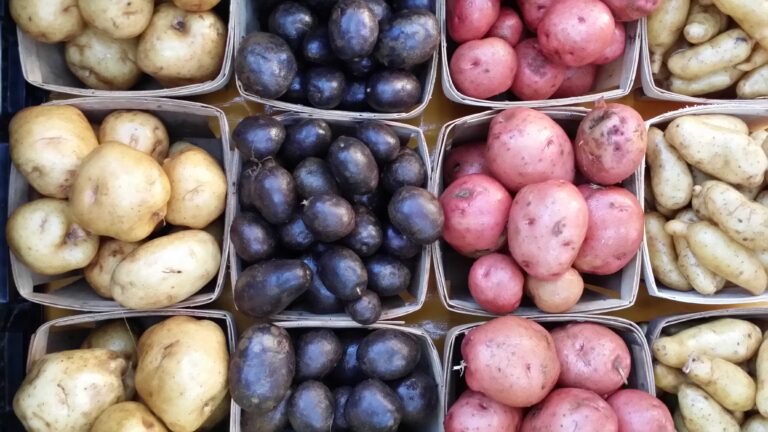
Over 53,000 samples of 47 washed fruits and vegetables were carefully examined. Some of the fruits/vegetables that made the list this year have been in the ranking for many years prior such as strawberries (ranked #2 this year) and spinach (ranked #1). A handful, meanwhile, are new to the list including potatoes – 90% of the potato samples tested positive for the herbicide chlorpropham which is used to prevent potatoes from sprouting. In case you were curious, the EWG also puts out a Clean Fifteen list with the fifteen fruits/vegetables with the least amount of pesticides present. For a more detailed view of the Dirty Dozen and Clean Fifteen lists from this year you can visit the EWG website.
So what does all this mean for us? And more importantly, for you?
Though the Dirty Dozen is certainly cause for concern, simply put we take a lot of comfort and confidence in knowing that as organic farmers we’re growing the very best and healthiest produce both for our bodies and for the planet.
This is done primarily without the use of GMOs (genetically modified organisms) in feed and seed nor through spraying of synthetic pesticides or fertilizers. The kinds of tactics we use are intended to cause as little to no harm to the environment as possible; in many cases, they actually improve it.
This is of course not to say that those pesticides and fertilizers don’t work. But the environmental impacts that come with their use are more vast than many of us realize and the confidence that we (and our customers) have in our food supply by doing things organically is unparalleled.
And it’s not all just talk. Our farm is certified organic meaning that we can apply the label to our products that we sell, ship, etc. This is a distinction given to us by the USDA that means we meet certain standards in our farming practices and livestock raising that gets reevaluated each year. It’s quite a stringent and lengthy process to keep our organic certification; we’re required to submit a detailed system plan to our designated and accredited certifier that shows how we’re adhering to the standards set by the USDA. Being a certified organic farm trickles down to almost every aspect of what we do, not just with the growing of produce. For example, we only feed organic grains to our chickens, turkeys and pigs. And our grass pastures grazed by our cattle and sheep are also organic certified each year.
So with our summer fruits and veggies, like potatoes, coming back into season you too can take comfort in knowing that they were grown safely and with your utmost health (and enjoyment, that matters too!) in mind.