As the first few cool mornings have welcomed us to fall, we are grateful, especially after such a long, hot, wet summer growing season. Now it is time to think about all the fun foods that coincide with the fabulous fall foliage. Some of the crops were planted long ago, others more recently, and some […]
There is an actual biological basis for why grass-fed meat and dairy has more omega-3 fatty acids. Cattle have four stomachs for a reason, just like their cousins, the giraffe and antelope, on the Serengeti plains of Africa. Their digestive system is a survival mechanism: They can go into the open grassland, away from the […]
Through our newsletter, our farm tours and our everyday conversations, we are dedicated to informing our customers about the value of consuming organic foods. We describe the biological systems at the foundation of farming systems, including the various methods of managing nutrients, with the hope of connecting your personal values and health with the little piece […]
A plant variety that has been produced through selective breeding is referred to as a cultivar. Let’s take garlic, for example. There are hundreds of cultivars of this one plant species. Each has been bred to have different clove size and taste characteristics, largely due to the different climates and soil types in which it has […]
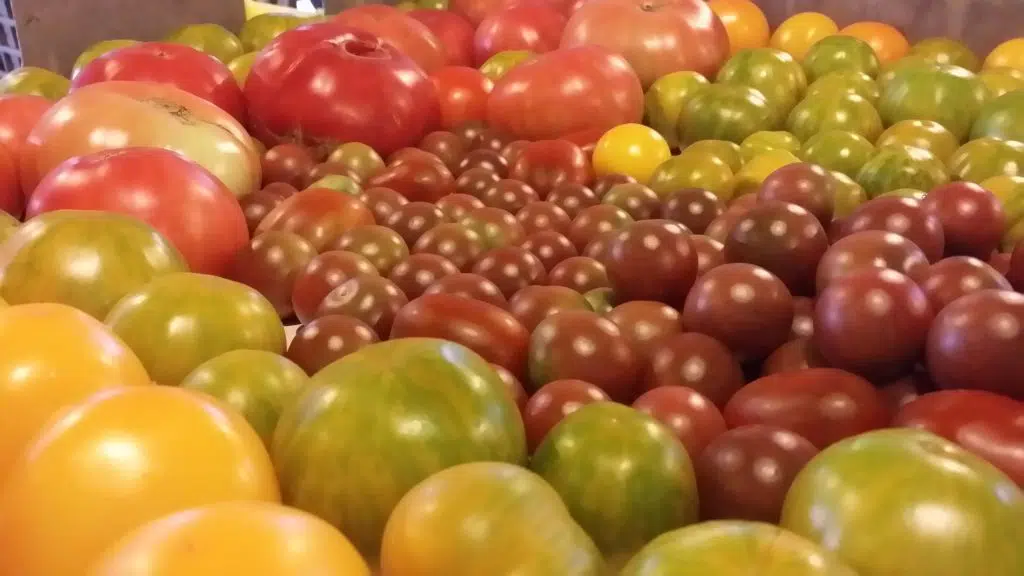
Most of you seasoned local foodies know the names of certain varieties of vegetables you like. Peaches and Cream sweet corn and Black Krim or Green Zebra tomatoes, for example, are some varieties that taste awesome. On our end, we want to plant the varieties that you are looking for, but we have to take […]
There are so many reasons to raise animals as they were meant to be raised, outdoors and on pasture, not confined to a warehouse-like building or bare-dirt feedlot and given synthetic feeds. One of those many reasons why organic farming is so important is something that you have probably heard about in the mainstream media: […]
The words fecundity and fertility are often confused, but there is a subtle difference. Fecundity is the ability of an animal or insect to produce offspring. Species with high fecundity tend to be those whose offspring are less likely to develop into adults. In cases where few eggs are laid, fertilized, or hatched, the adult female is biologically […]
It’s hard to imagine how many thousand species of bugs there are that call Elmwood Stock Farm home. Only a handful would be considered pests, in that they show up in large numbers and wreak havoc on an otherwise-stable ecosystem. Farming basically creates unique environments, like a field of corn or rows of vegetable plants […]
Cattle have been a part of this farm’s story since the early 1930s, when members of the Bell family first worked land in Scott County. The cattle-tending tradition has been passed down and now rests with Cecil Bell and his son, John Bell. Cecil and John each got their start with Elmwood Stock Farm’s cattle […]
Making stock from what’s left after you’ve picked your chicken clean is another way to get the most value out of your organic chicken. Chicken stock is a foundational ingredient in so many types of recipes that it makes sense to have a stash frozen or canned, plus there are nutritional benefits to making bone […]