
 Most of you seasoned local foodies know the names of certain varieties of vegetables you like. Peaches and Cream sweet corn and Black Krim or Green Zebra tomatoes, for example, are some varieties that taste awesome. On our end, we want to plant the varieties that you are looking for, but we have to take into account many factors, like hardiness, disease resistance, yield potential, appearance and organic availability, to name a few. But ultimately, flavor and nutrition are what it is all about.
The first planting decisions were made long ago. No genetically engineered seeds or plant material will ever cross the Elmwood Stock Farm cattle guard on the UPS truck that delivers shipments to our packing shed. That primary decision cuts out lots of sweet corn, potato and squash varieties that are available to other farmers.
Organic farmers are required to use certified-organic seeds and plant materials (which are always GMO-free). This rule made it difficult to source the varieties we wanted in the early days, but it also spurred many farmers to become organic seed growers to meet the demand that the rule created. Now there are several seed companies that specialize in offering high-quality, organic seeds in the varieties that market farmers like us are looking for. Johnny’s Selected Seeds, High Mowing Organic Seeds and Seedway are three sources we go to for much of the seed that we use. Some crops, like broccoli, have limited organic-seed availability, which we have to live with. There are specialty, organic potato, ginger and sweet potato growers that we buy from directly.
Every year, we start with varieties we are familiar with as the basis of our production. Many are names you are not familiar with, but they are tasty and meet the production attributes we are looking for: good germinators, sturdy stems, resistance to fungal spores, etc. As discussed in a previous CSA newsletter about sweet corn, husk coverage is important to produce clean organic corn. Good foliage canopy is important to protect peppers from the scalding rays of the sun. Cold tolerance is important for spinach and lettuce for our fall-winter-spring production period. Some squash varieties just can’t take the heat of summer.
 To find the varieties we’re looking for, we scour over various university websites and several trade publications, evaluating variety trials that rate these attributes as well as yield potential. The University of Kentucky College of Agriculture Horticulture Research Farm at the southwest corner of Man-O-War Blvd. and Nicholasville Rd. operates a CSA program and evaluates varieties and new growing techniques each year. We work closely with them and even conduct some larger field trials with them here.
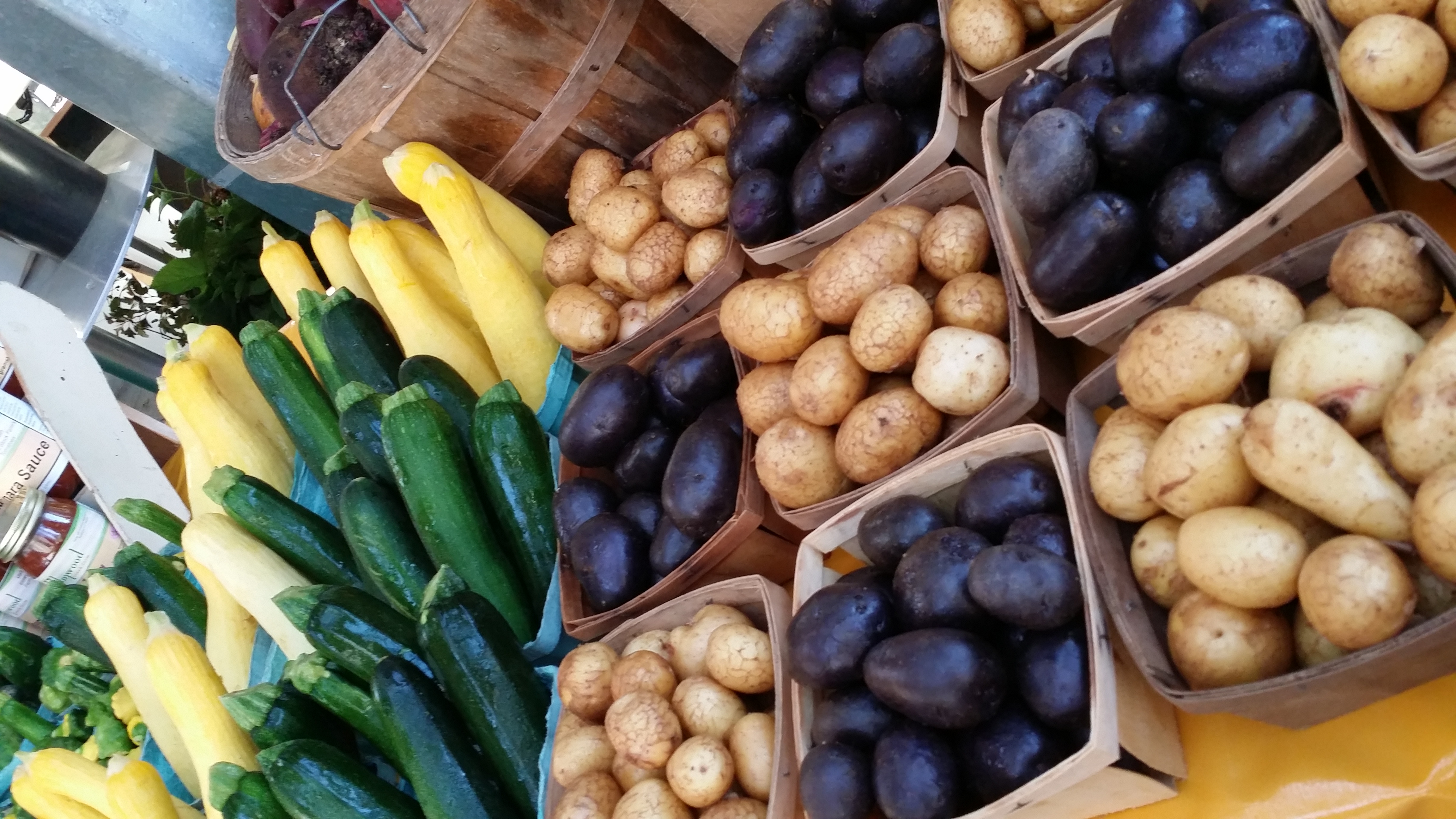
We also experiment with new varieties in hopes of finding one that grows and yields well plus tastes great. We learn about varieties that our farmer friends have tried and liked, too. Remember the cranberry potatoes we had a few years back? Customers loved them, but they are low yielders, which equates to a high cost of production. Same for Yukon Gold potatoes, so we grow Yukon Gem potatoes instead. Everybody loves them, including us.
The hardneck garlic we have most of the year is called “little, old lady from the farmers market garlic”—old lady garlic, for short—because an older gentleman brought us tiny garlic cloves one summer that he got from a little, old lady in another county who had been growing it for years. He gave them to us to plant because he liked it so much and thought we might like it, as well. We divided the cloves, planted them, and saved them back to plant again. That was years ago, and now we grow enough for all our CSA members and our farmers market customers. Not only is it tasty, but it meets the other necessary attributes of sturdy, good cold tolerance and good husk coverage over the bulb.
Varieties are important to the animals of Elmwood Stock Farm, too. The variety of laying hens we raise have been developed to perform well on pasture. They are hearty, they are good feed converters, and they consistently lay eggs all season. Some breeds would shut down in cold conditions, and others eat a lot of feed but lay few eggs. We still have a high cost of production, but they are the best eggs in the world.
Starting with Seeds
 We save some of our own seeds from year to year to maintain varieties suited to our farm, but that can be tricky, as well. If seeds are not properly harvested and stored, the germination rate may be low. Seed size and shape can be quite variable on some crops, like corn. Look closely at an ear of corn: The kernels at the tip are more rounded and those in the middle tend to be flat. This can cause problems when it comes time to run them through the planter in the field. But for the heirloom varieties we like for cornmeal, we take the time to sort them so we can preserve the strain we have developed.
Some plant diseases can be endemic to the seed, while others may hitch a ride on the outside of the seed. For these reasons, we support the organic seed farmers that know way more than we do about seed saving and keep the problems out of here.
Once all the potatoes are harvested, we store some for sale through the winter, while others are saved to plant the following year. We often order more from specialty organic potato growers in the spring, as well. We can get organic sweet potato slips we like from other farms, which is good, because it is not easy to maintain the varieties we like by starting our own slips each spring.
We are always glad to share with you the names of the varieties we grow. Some you will recognize, others you won’t. But with the growing interest in organic food, the organic seed farmers are working diligently to adapt the varieties we all like to fit organic production systems. We are getting better at achieving higher yields on some of the garden-variety vegetables you are familiar with. Regardless, rest assured we grow the best-tasting varieties for your enjoyment—free from genetic modification—even if you have never heard of them.
(An abbreviated version of this article was printed in the 2016 week 14 CSA newsletter.)