
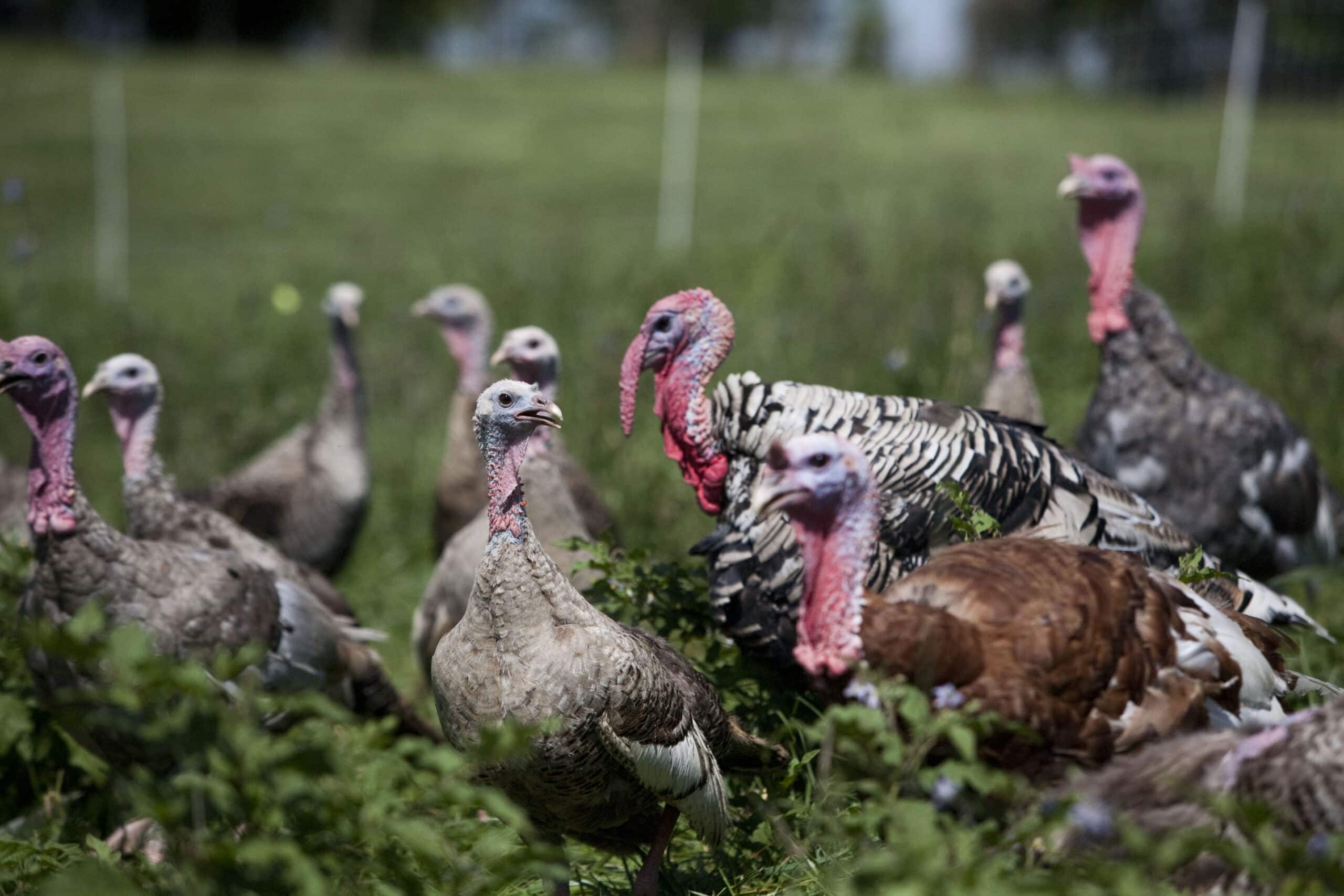
We started raising broad-breasted turkeys some 20+ years ago, I should remember the exact date, given it was such a memorable experience. Going in, it seemed they would be similar to rearing big chickens, which they are, sorta. But because they are naturally gregarious, the feeding, care, and handling is completely different. When you gobble-gobble at them, they gobble-gobble back to you. When my cell phone rings out in the field, they gobble-gobble back to me. All the while, they eat lots and lots of feed, as they require a higher protein diet than do their avian counterparts. That first year they averaged well over thirty pounds dressed, much more than most people want. Thanks to those that took the plunge and stuffed them into their ovens, and the resounding positive feedback about how awesome they were, we kept going in subsequent years.
A few years into our turkey rearing experience, we were approached to to help preserve heritage breeds of turkeys, antique ancestors of the supermarket birds (read on for more on that).
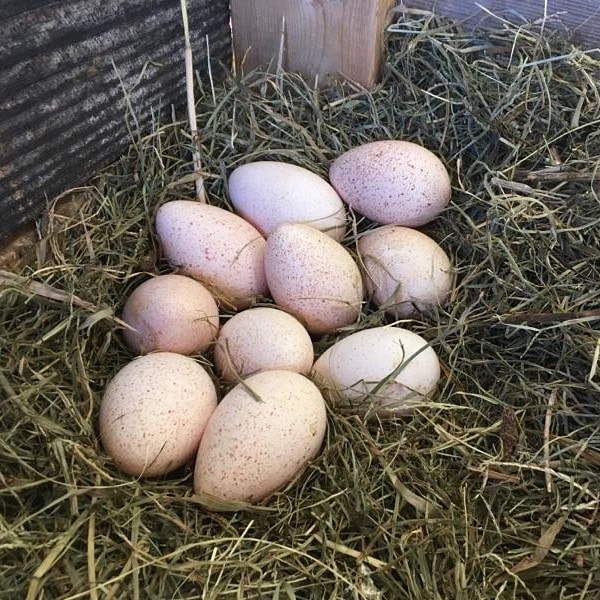
We started with a dozen or so young poults. The birds were completely different from the broad-breasted ones we had gotten accustomed to so there was a big learning curve. Jumping to this year, our heritage turkey flock has grown exponentially. We hatched out over 200 Narragansett turkey poults at Elmwood Stock Farm this spring, the eggs gathered from our breeding flock.
Not to neglect the importance of our broad-breasted turkeys, as they are a nice flock this year too. But I thought it would be nice to share a bit more about the history of these heritage birds and what makes them so special to us.
Rise and Fall of Narragansetts
In the mid-1800s somewhere in Rhode Island, a farm family saw fit to cross an Eastern Wild Turkey with the domesticated version of the day.
The wild turkeys’ reputation as excellent foragers may be what they thought the domestic bird lacked. Seemingly they must have been well received on the dinner table as the numbers grew dramatically and became popular down into the Mid Atlantic and out into the Midwest, recognized by the American Poultry Association as a standard breed in 1874. As the country matured through the 1900s, the domesticated bronze turkey out-muscled all other breeds as turkey breeders and agriculture in general industrialized for efficiency, leaving the Narragansett turkey breed behind.
We had heard that The Livestock Conservancy (the American Livestock Breeds Conservancy, as it was called then) was asking market farmers like us to help preserve the breed for posterity. While we do our part on lots of fronts, we were not interested in starting an agricultural zoo business. We thought if there were a market, we would raise lots of them. There was some reluctance with the counter-intuitiveness of that concept—eat them to save them—but it seemed like creating the demand for this endangered breed could work.
We had been raising the current-day version of domestic turkeys on pasture with organic feed for several years and thought we should give these heritage turkeys a go. We secured several Narragansett and Bourbon Red poults from a poultry hobbyist customer of ours in the mid-2000s.
Narragansetts’ Best Qualities
These birds are seasonal egg layers, from mid-March until mid-May. The eggs are gathered daily and incubated for 28 days. The poult pips the shell in a perfect circle around the widest part of the shell to release itself, a miracle every time.
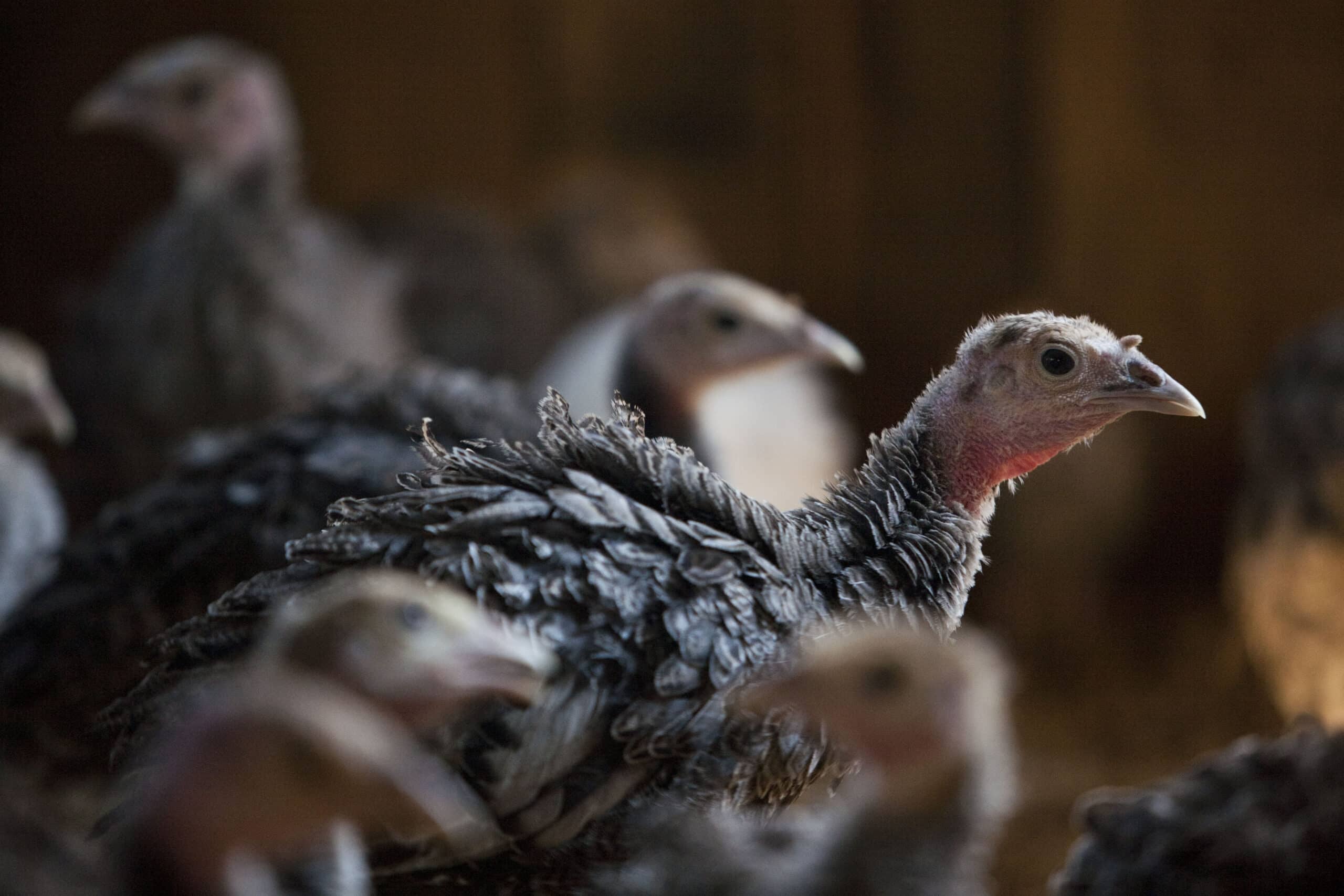
These little fuzz balls are quite fragile. The hens must be awesome mothers in the wild. They stay in the brooder, a 95-degree safe space, for four or five weeks before we dare put them out to pasture. They bond with the portable shelter, complete with fresh water and feed. Hawks and owls are their nemesis, so we have assembled all manner of contraptions to keep these aerial hunters away.
I now see what the Narragansett breeder was after: an athletic, meaty bird content to stay on the farm, not fly off into the woods. These birds are individually very curious with a great degree of skepticism. They are relaxed when we are about and tense up when strangers approach. Their inclination to warm up slowly to a different watering device or feeder should not be confused with ignorance. It is the very thing that keeps them safe in the wild. I once got the bright idea to feed them microgreen fodder so they could glean the unsprouted seeds, and they never touched it—would not get within 2 or 3 feet, and I am still not sure why.
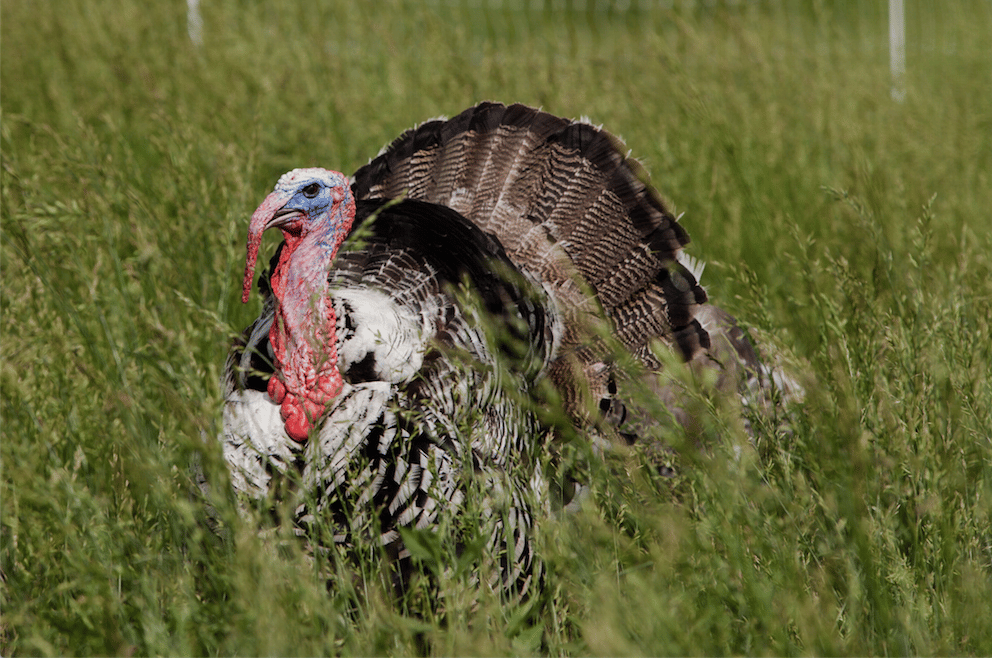
The turkeys use a variety of vocalizations to talk to one another, be it danger-alert chirps or cooing as they meander through fresh pasture. Mature toms do a deep, barely audible thumping sound when they splay their tail feathers and scrape their wings along the ground in a slow strut. The wattles become fiery red, and a blue pigment emits from the back of their head. The toms will all exhibit this behavior at the same time but rarely fight with each other. Fascinating.
Narragansetts’ Place at Elmwood Stock Farm
So the first heritage turkey group we started with roamed the farm by day and roosted in the tier rails of a tobacco barn that first year. We had to find the nests and collect the eggs when the hen was off feeding. Some were so protective, we had to let the hen hatch them. The most scared I have ever been on Elmwood Stock Farm was collecting the turkey poults while keeping mom at bay. We subsequently built a suitable portable turkey house, complete with communal nest boxes, reducing the stress for us and them.
We harvested a few heritage turkeys that fall to see how they compared to the broad breasted birds we are all familiar with, but we kept most of the birds that year to grow the flock. We loved the texture and flavor, as did the customers we included in our focus group. We had something. Over the years, we have increased the size of our breeder flock to lay eggs for the next year’s turkey crop.
These heritage turkeys are smaller than the conventionally bred domestic turkeys, as the heritage genetics have essentially not changed since the late 1800s. The hens dress out at 6 to 12 pounds, and the toms run from 12 to 20 pounds. The meat is luxurious. Its moisture comes from the rich fat under the skin and marbled throughout.
With our organic, pasture-raised broad breasted turkeys and the heritage breed both as options this year, it’s a good time to treat yourself to a turkey that tastes like turkey was meant to be. In the process, you’ll continue to create demand for the production of these heritage fowl. Your food choices really do make a difference. —Mac Stone