
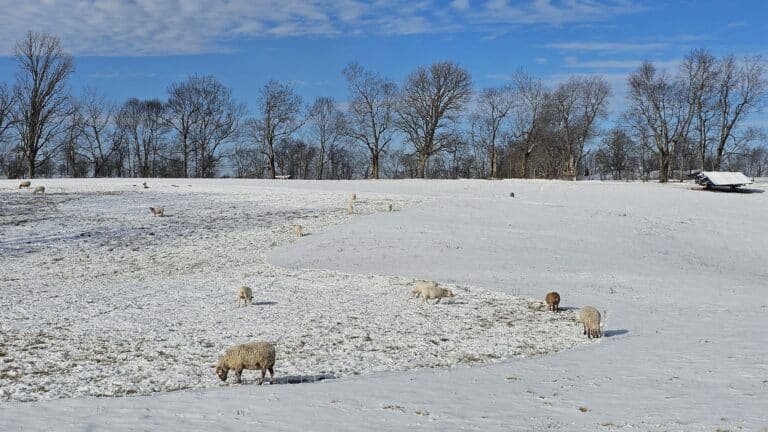
With a thick blanket of snow still covering the ground from our recent snow storm it’s easy to assume that the land is in a serious state of dormancy. And truth be told, it’s all too easy to feel that way ourselves, especially as we ease our way into the new year. But in reality, underneath all that snow teems a vibrant community of microbes embedded in the soil and very much alive. And not only is there life but there is life that is actually being nourished and nurtured by the trappings of winter on top of it.
Our flock of sheep have been spending these cold, sunny days out on the pasture enjoying the opportunity to graze. Yes, graze! They’re quite adept at pawing through the snow to get the grass underneath and though it might not seem like it, this is a sign of regenerative agriculture at work.
We have given the pasture they’re currently occupying ample time to rest, meaning that no animals have been allowed to graze on it this past December. This in turn allowed the grass to remain a standing stockpile of healthiness with reduced parasite exposure and soil erosion. The snow storm then delivered Mother Nature’s form of insulation which further protected the grass while also feeding it. You can see we’ve also established fenced boundaries as part of our rotational grazing protocol to protect other areas of the pasture for future use.
With regenerative agriculture we work with the land and not against it as much as possible. Its core component is in its name; a method of practicing agriculture that regenerates, restores and improves soil health and prioritizes healthy ecosystems. In our case, this is also a core principle of organic farming, which we consider a win win.
Unfortunately there’s no “blueprint” for how to improve soil health though certain principles of the past inform our current decisions. For example, after many years of tried and true use of cover crops, we know that they feed the microbes in the soil as well as protect it from erosion, weeds and other pests. Over the years we’ve honed in on what works for us though we are constantly modifying and improving upon our methods.
When it comes to our organic vegetables and fruits we don’t use any chemical fertilizers or pesticides, which is also a cornerstone of organic farming. We also use netting and other natural deterrents to protect against birds, raccoons and deer. In addition, planting and harvesting is done by hand whenever possible to avoid excess soil disruption. Growing produce organically AND regeneratively is not historically the easiest or cheapest method and thus our prices are typically higher than what you’ll find at the big box stores. But we know that healthier farming practices means healthier food and a healthier planet, which we’re happy to choose time and time again.
Then of course there’s rotational grazing which we practice with all of our livestock. The overall goal of rotational grazing is to avoid sequestering livestock to one pasture to graze which leads to more exposure to parasites and a greater increase in soil disturbance. For example, our cattle are rotated across hundreds of acres of pastures for more than 850 days, as opposed to remaining in just one section. As they graze on grass they also keep the weeds in check, while the nutrients in the soil that are being depleted get replenished in the form of manure, which helps more grass to grow. Each pasture is also given time to rest after the cattle are rotated to the next paddock we set with portable electric fence every 40 days or so as needed to allow local ecosystems to continue to flourish. Many are surprised to learn that our chickens are rotationally grazed too! At night they go into what we call their chicken tractors which are moveable outdoor pens that can be closed up to protect from predators and are moved each day to give them an opportunity to roam on new pastures. This also allows for picked through pastures to rest and revitalize for future grazing. Just like growing fruits and vegetables regeneratively, rotational grazing is more labor intensive but you can really taste the difference in the meat – and see the difference in the soil.
Regenerative agriculture is about doing things the right way, not the fast way. But growing and raising good food for our food and farm family makes it all worth it and we are proud to practice regenerative agriculture for as long as we are able.