Elmwood Stock Farm, Georgetown KY, USA || Weekly subscriptions available now! Details here.

Alliums are ubiquitous in American kitchens. Restaurants in Europe would shut down without them. They are easy keepers, good for you, and catalysts of flavor for all sorts of meals and dishes. Take the leeks out of potato-leek soup, and you have runny potatoes. Take garlic out of your pasta sauce, and you have V8 juice. No slab of onion on a burger or BBQ, and you have college food. Alliums are often overlooked as vegetables yet are integral to every meal.
While most of us are familiar with the long-lasting, matured, and cured bulb of the plant (the kind sold year-round at the grocery), there are many stages before this “final stage” of the garlic bulb when you can harvest and make good use of the garlic plant. Let’s walk through the garlic life cycle together, from start to finish.

We have figured out how to have farm-grown organic garlic all year. Garlic is a unique allium in that its bulb contains about 8-12 individual cloves. We save back some cloves from the harvest for planting in late October or early November. Sprouting before winter, covered with a thin layer of straw to prevent frost-heaving soil that can dislodge tender roots, the plants establish themselves before winter dormancy.
When planting, separate the bulb into cloves and plant each one. These will sprout to form their own plant. If you’ve ever let a bulb go unused for long enough, you’ve seen a little green sprout form at the clove tip.
You guessed it: Your number of garlic plants can explode exponentially year after year by planting this way.

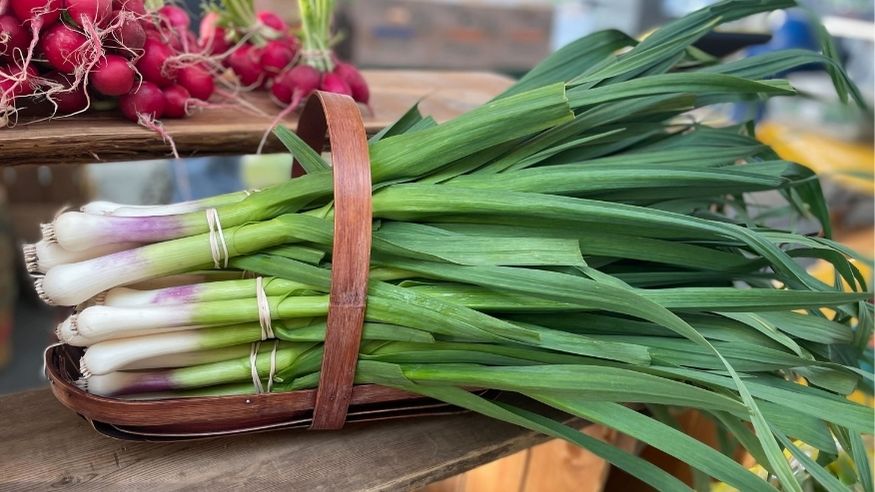
When spring comes, the roots are ready to grow in the warming ground, and the plants take off. The stalk thickens as new leaves emerge. At this point we thin the plants in the row to offer you tender green garlic, bursting with flavor and easy to work with. Also known as young garlic, green garlic is the intact stalk and bulb of the immature garlic plant. We begin harvesting around May, but you can harvest green garlic anytime, once a straight skinny stem has formed, and can keep harvesting even once cloves start to form.
It looks a lot like a green onion, but the stalk is firmer and the taste is, well… garlicky. As it matures, the bulb size will grow, going from a small sprig that looks exactly like a green onion to a fuller bulb.
Fresh green garlic can be kept in a plastic bag in the refrigerator and is best used quickly. Any accumulated moisture in the bag will cause it to spoil.
Use it like you would mature garlic – slice thin, then sauté until aromatic and tender to add delicious garlic flavor to your dish. To equal the potency of a clove, use about 1/3 of a green garlic stalk.


A garlic plant wants to flower! The plant grows these curly-cue stalks that would normally open up into a beautiful allium bloom. We snap these off before they blossom, harvesting the curly, flavorful stalks in the spring. They usually grow in early June and last for just a few weeks. Yes, these are “edible flowers.”

Example of a garlic flower. Even though the stalks straighten out once it blooms, you can still see how it used to curl.
Scapes give us a delicious, deep garlic flavor while we wait for the plant’s bulbs to mature. But more than that: they actually need to be snapped off or the plant won’t produce the cloves we love to eat! By preventing the act of flowering, the plant redirects its energy down toward the bulb.
How to Use and Store Garlic Scapes: Store them unwashed in a loosely wrapped plastic bag in the refrigerator for up to 2 weeks. You can also place them upright in a cup of water while in the fridge, to help them last. Garlic scapes can be chopped or diced raw into green or pasta salads, sautéed in place of bulb garlic, sprinkled onto pizza, eaten raw, used in place of green onions, or used anywhere garlic flavor is desired. Scapes can also be chopped and frozen in freezer bags or containers.

Like onions, a mature garlic bulb can be eaten fresh or cured.
Fresh garlic can be eaten and used exactly like cured garlic, but because it isn’t cured, it’s not going to last you as long. Curing vastly extends a garlic bulb’s shelf life, but fresh garlic has a unique, mild flavor that we only get to savor for a moment out of the season, so take advantage!
Store in the refrigerator within a brown paper bag to keep it cool and dark, which prevents sprouting. Including a paper towel in the bag will absorb moisture and prevent spoilage.

Cured garlic appears at our market in the summer, after sufficient time has passed to complete the curing process. To cure them, multiple bulbs are tied together and hung to dry in a darkish, well-ventilated environment. It’s best not to wash garlic heads before hanging because we want to ensure that they dry fully. We use our barns for curing, similar to how tobacco was cured years ago. We harvest the crop and hang the garlic bulbs from the tier rails. But home growers can easily use a basement or garage or shed, if they have one.
The hardneck garlic we have most of the year is called “Little Old Lady From the Farmers Market garlic”—Old Lady garlic, for short—because an older gentleman brought us tiny garlic cloves one summer that he got from a little old lady in another county who had been growing it for years.
He gave them to us to plant because he liked them so much and thought we might like it as well. We divided the cloves, planted them, and saved them to plant again. That was years ago, and because it continues to do so well in our micro-climate, we now we grow enough for all our CSA members, our farmers markets, and additional customers in our community.
We’re also testing another softneck variety, which can be a longer-lasting product once cured!

Hardneck (first image), vs softneck (second image)
Whether you shop with us by way of CSA, farmers market, or online ordering, you can watch the phases of the plant unfold throughout the year and experience each one for yourself.
Find our Farmers Market locations, or see if CSA is a good fit for you! It’s easily the best way to watch the local food selection evolve with the season.