
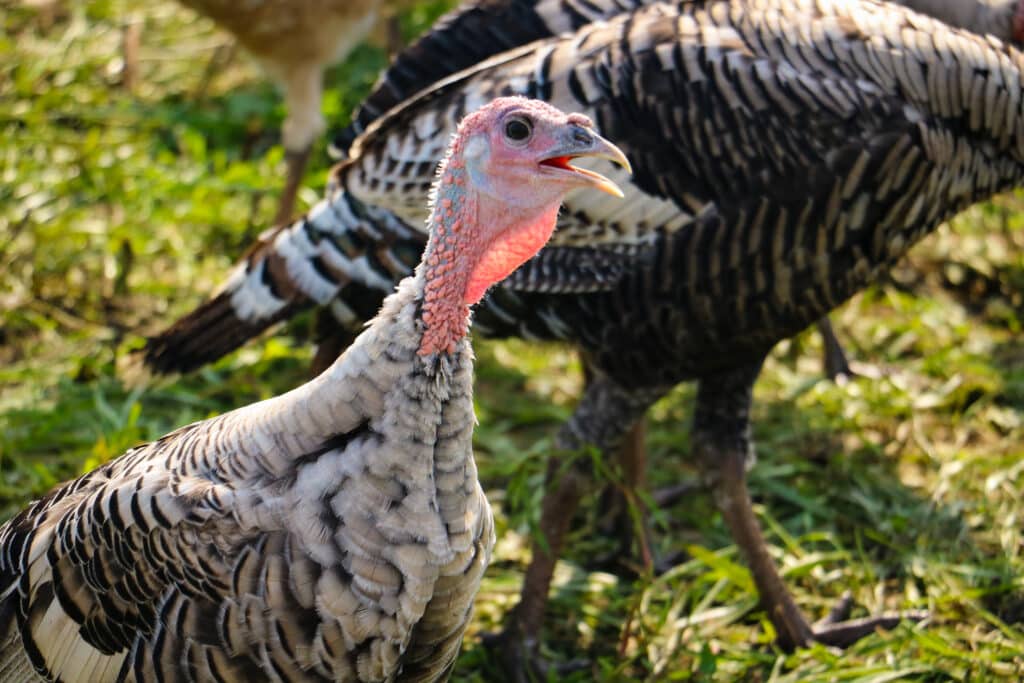
You’ll find two types of organic, pasture-raised turkeys here at Elmwood Stock Farm: Heritage Breed and Broad-Breasted Breed. The Broad-Breasted Bronze turkeys have the full, plump white-meat breasts many of us are accustomed to. These look like the turkeys you find at the grocery store, but the similarities stop there. Our Broad-Breasted turkeys are raised outdoors on pasture with USDA Certified Organic feed grains, produced in a manner that matches the other values you hold. Our Heritage turkeys are the domesticated cousins of the wild turkeys you see along back roads and hiking trails, and closely resemble the turkeys farmed before the ways of industrialized agriculture.
How do we raise them in accordance with organic, animal-welfare standards? We want to walk you through Elmwood’s turkey-raising cycle and reveal just what’s at play when the job is to keep these animals happy, healthy, and free of synthetic chemicals.
Incubating Eggs: Simulating Wild Turkey Brooding
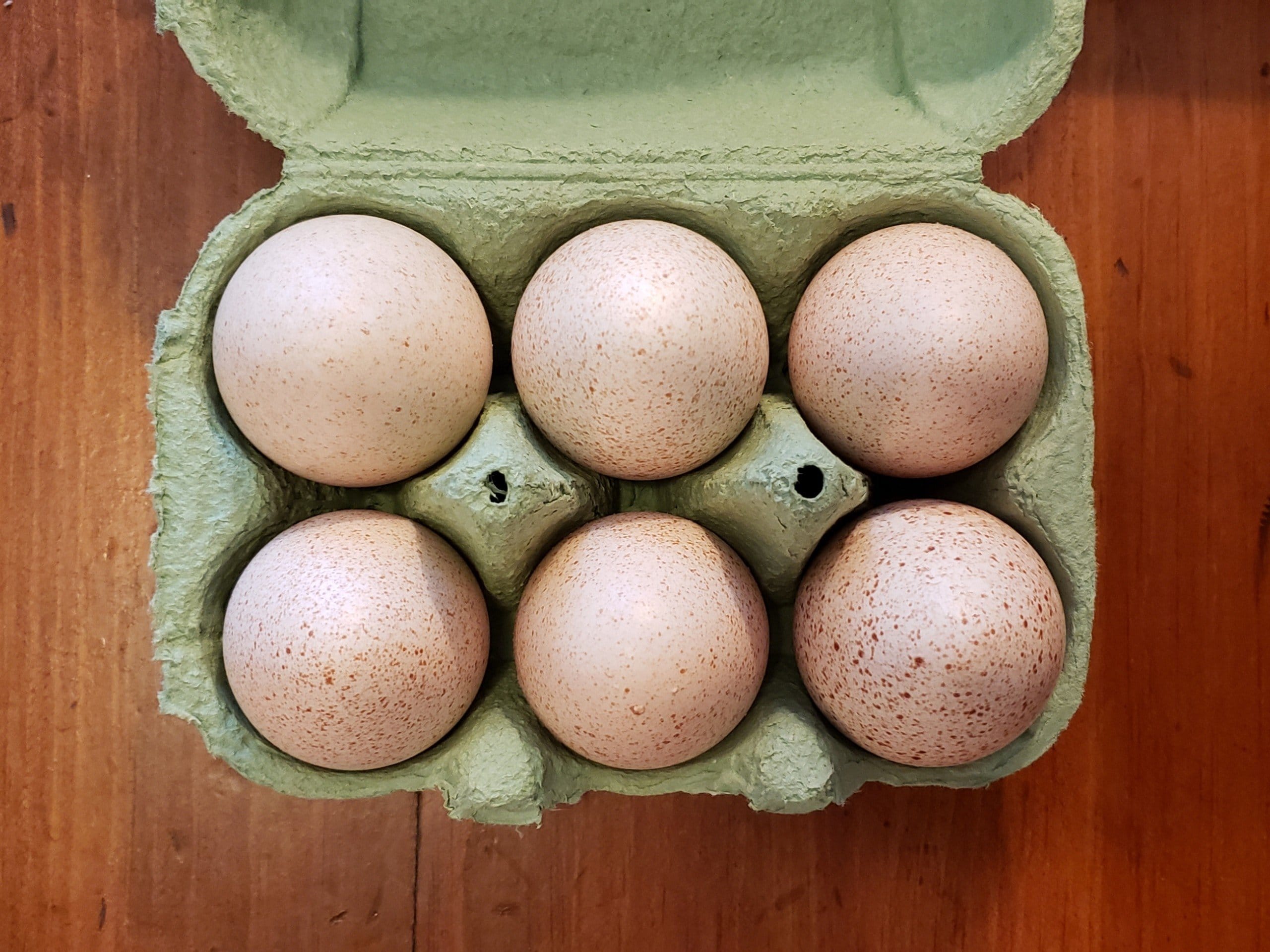
Each Heritage Breed Turkey maturing on our farm this year started from an egg that was laid here on Elmwood by one of our breeding flock hens.
In mid-March, the hens begin laying. Springtime is when they would naturally lay in the wild – it gives the poults enough time to mature in time to survive the winter. We’ve taken on the responsibility to raise these birds as a wild hen would. No small task.
So how do we do that? We start by gathering the eggs daily during this time. When we have exactly 198, we put them in our on-farm incubator: a wooden cabinet with precise temperature and humidity control.
Each tray contains racks with rows that cradle eggs. The trays rotate back and forth by 45 degrees, dozens of times a day, all to simulate what a 9-pound bird would do when rolling them around in the nest. Twenty-seven to 28 days later, each of these eggs will hatch, all within 36 to 48 hours of each other.
At hatching time, the poult pecks a perfect circle precisely around the outer circumference of the widest part of the shell and essentially pops the lid off. Every time, a little miracle. We repeat this incubation cycle a few times throughout the spring and early summer
Just-hatched Turkeys, aka “Poults”
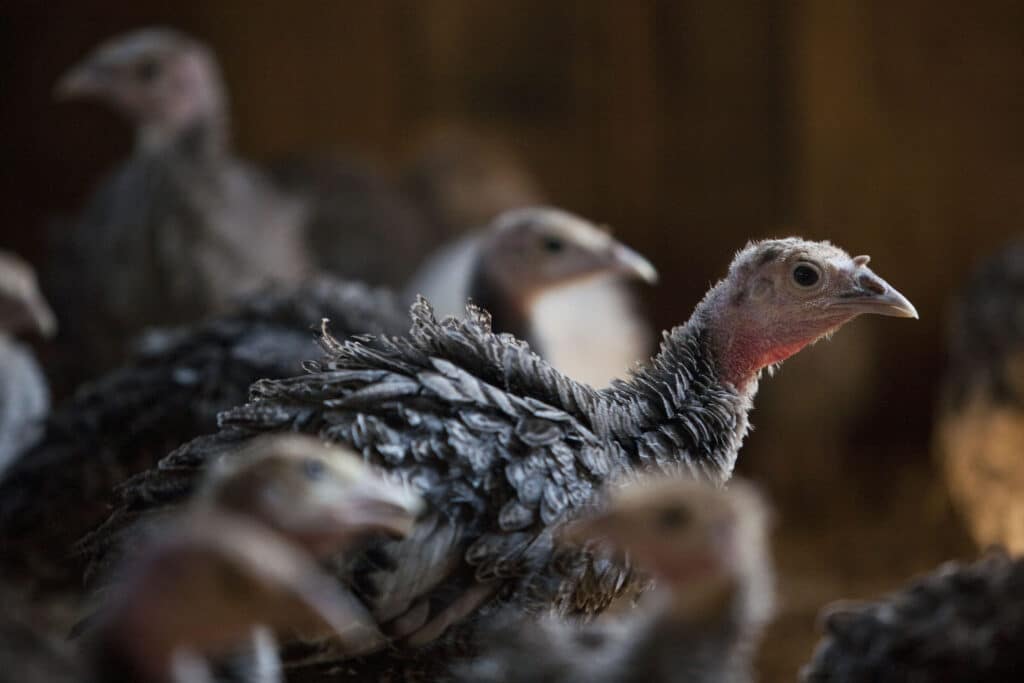
Now that we’re holding hundreds of fragile one-ounce birds, we’re really committed.
Each needs to stay warm and well-nourished. Our brooder barn and handling techniques have evolved as we have learned what works best for the birds. Once the first set of turkeys hatch, the time it takes to do daily chores goes up by about an hour.
We monitor the heating and ventilation in the brooder barn countless times per day, depending on climatic conditions. It must be temperatures of mid-90s and ventilated, but not drafty.
We can tell what the poults need by the way they behave. If they huddle up together, they’re cold. If they’re scrunched around the edges, they’re hot. The corners of the room are rounded to keep them from getting crowded in. Because, get this: the birds can’t walk backward.
Adulthood: Graduation to Fresh Outdoor Pasture
The pasture shade houses we built quite a few years back look simple, but they incorporate numerous bird-behavioral design considerations. These heritage turkeys could fly away into the trees and live for years. We know this because one of ours did so. So we make every accommodation to keep them comfortable enough that they’ll want to stay in their home.
Each shade house is a little different. But all of them use some kind of 2×4 framing that supports a roof over an antique wagon running gear. Some of these wagons still have the steel wheels.
The metal frame acts as an anchor in high winds, which we want to pass under and over the houses without tipping them over. The birds like to roost on all parts of the rigging and rails. Once they spend a few nights in the same place, they like to go back to that very spot every night. We move houses with a tractor in the morning so they have time to realize exactly where home is at dusk. The open-sided shade structures not only repel solar rays and rain, but also offer refuge from aerial predators.
During their lifetime, absolutely no antibiotics, GMO grains, or synthetic chemicals are used to raise Elmwood turkeys.
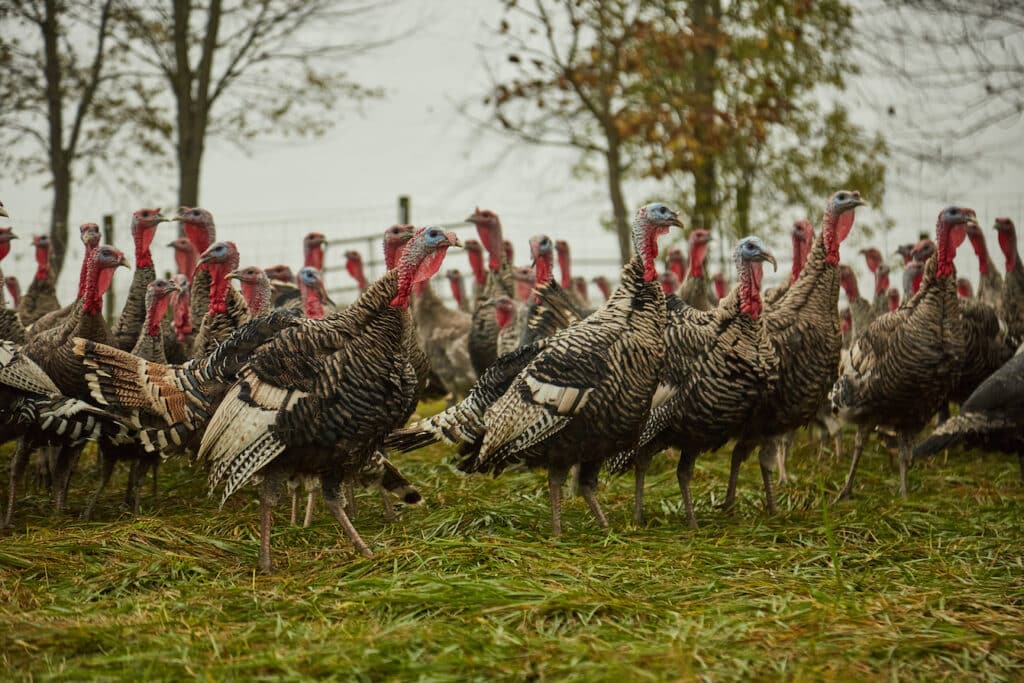
Turkeys Getting to Be Turkeys
Somewhere in the process of industrializing turkey production, some folks have mistaken the turkey’s cautious curiosity for stupidity. Spend a few hours with them out here on the farm, and you’ll realize they’re far from it.
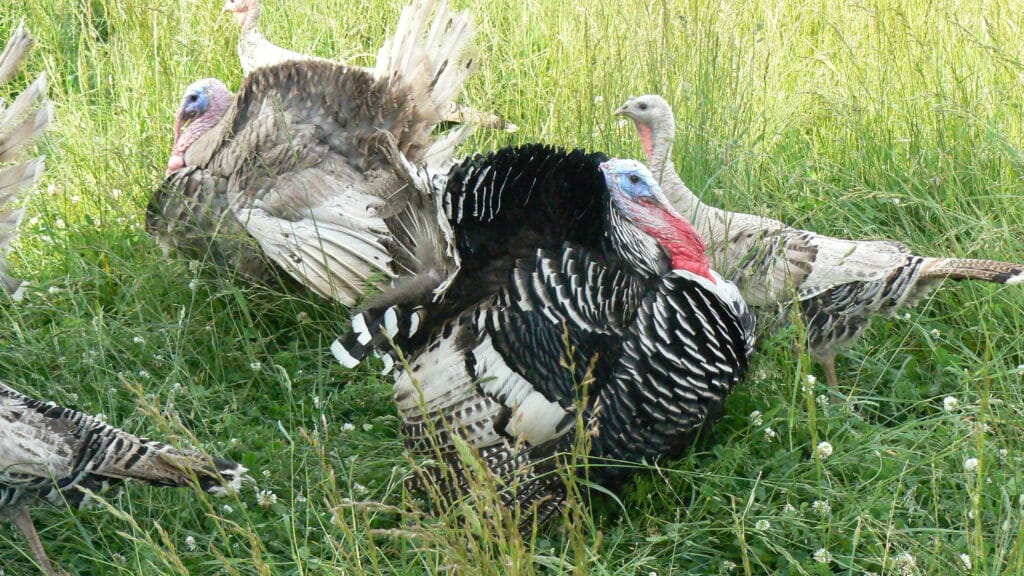
Watching the flocks’ behavior and activity is part of the joy of turkey farming. When we open the electric fence netting to move the turkeys to the fresh pasture every few days, the dominant toms and hens scamper out into the field first in search of unsuspecting insects.
Others cautiously look around, not sure if they want to keep up, or maybe they don’t realize what all the fuss is about since the early adopters eat most of the bugs. Besides, they must be thinking, the house is still back here.
Watching the turkeys strut and flap about is fun. Oftentimes, a small group will get so excited when they start running that they end up taking flight, but then quickly realize they don’t want to stray too far from home, and circle back to us. (Whew!)
Turkeys Raised Right
By sourcing your Thanksgiving turkey from a farm that prioritizes their ability to roam fresh pasture, live without antibiotics or synthetic chemicals, and experience a natural turkey flock’s social dynamic, you’re contributing to wholesome agricultural practices that are better for animals and the planet.
You’re also taking home a product that’s genuinely better for you. Elmwood Stock Farm has been continually certified organic since the year 2000. We’ll always prioritize growing clean food using practices that work in tandem with nature, not against it.