
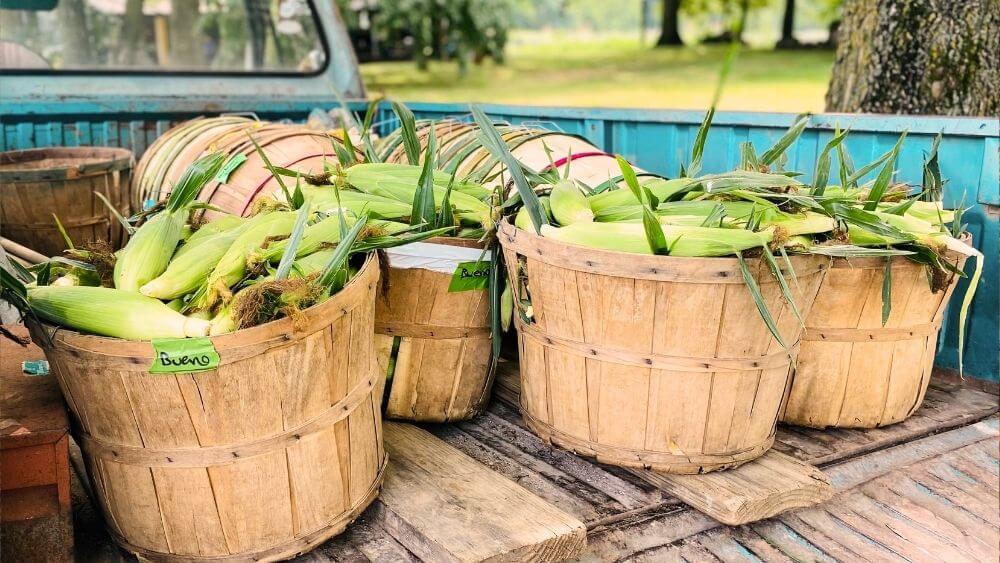
As of last week, Sweet Corn is here! Few summer staples bring us as much joy as fresh sweet corn on the cob. But the perfect ear is not an easy thing to achieve, especially when growing it organically.
Corn is biologically tricky to grow and make look good. In the U.S., corn is in thousands of foods, drinks, cosmetics, and plastics. It’s also the most commonly used grain for beef, dairy, pork, and poultry. But sweet corn is not the same as cow corn. Genetic modification of corn is the norm, not the exception. There are lots of misconceptions about corn, so we will try to clear up the more popular ones.
How Humans Started Growing Sweet Corn
Corn is a tall grass that produces a cereal grain. Its ancestral roots are in Mexico, where it was cultivated by indigenous peoples as the maize plant. It’s known as one of the earliest domesticated plants, and by extension, the beginning of agriculture in this hemisphere.
Seeds from the best plants would be saved for the next crop. By selecting for ear size, kernel size, and how easily it could be ground for meal, people discovered if you grow two different kinds next to each other, the resulting crop was better than either one by itself. This is now known as cross pollination, which creates hybrid vigor.
As the Native American people were growing corn for dry grain, there is evidence they may have begun to eat the kernels while still soft, possibly because of the need for sustenance during long dry summers. This led them to purposely cross-pollinate different types and select certain varieties for sweetness and taste.
Many years later, there are now thousands of commercially available varieties for farmers and gardeners to grow. The varieties may be yellow, white, or bi-color and range from traditional open-pollinated heirloom varieties, to hybrids developed through cross-pollination, to genetically modified organisms.
Why is Growing Sweet Corn So Tricky?
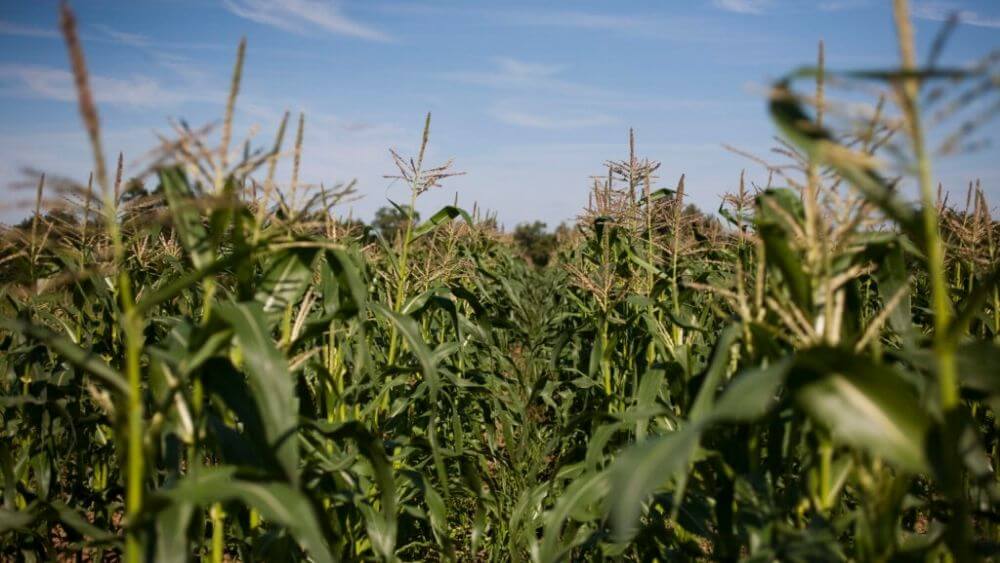
When the plant reaches sexual maturity, the tassel at the top (the male part of the flower) sheds millions of pollen grains. These are carried by the wind, and can stay airborne for miles.
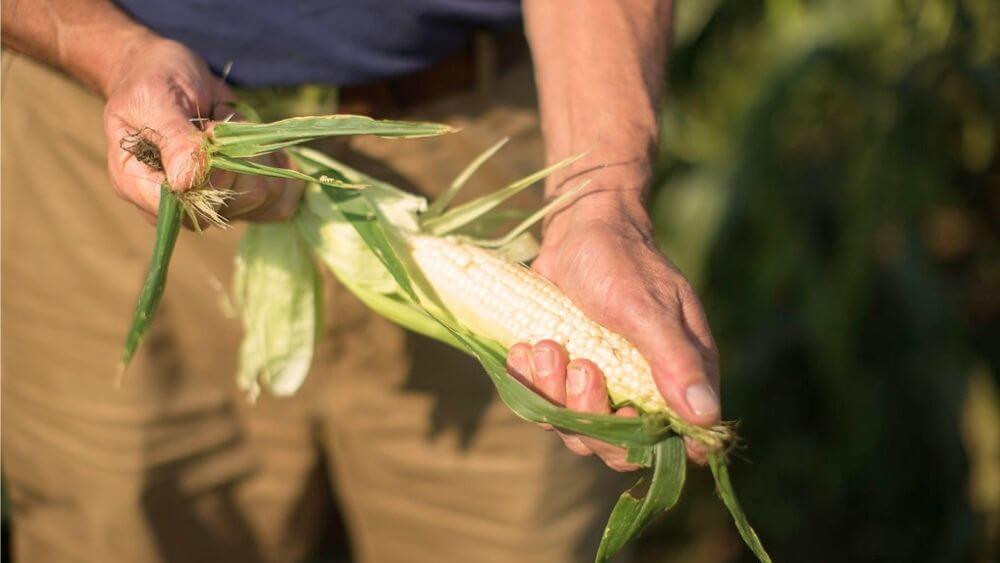
The female portion of the corn flower is the ear, with thin hair-like silks that extend into the air to catch the falling pollen. Each silk is actually a tube that must catch a pollen grain, then migrate it through to the cob to fertilize the zygote, forming an individual kernel. If any of these silks are damaged, the kernel just doesn’t form.

Sometimes the damage to the silk is dealt by the elements. Extremely hot and dry weather can shrivel the silks, which would prevent the pollen grain from being transported to the cob properly. There are also silk-clipping pests that wreak havoc, such as Japanese beetles and June bugs, that like to eat the fresh and tender silks at the root, severing the connection point for the pollen.
Being that we farm organically, it presents an extra challenge in that we do not use insecticides that would otherwise thwart these corn attackers, but instead we rely on deterrents and protections. Funny enough, we’ve figured out that mylar birthday balloons hung on 12 to 15 ft poles do an excellent job of scaring off the droves of blackbirds, who peck through the husk to get to the developing kernels. For the more savvy predators like raccoons, skunks, deer and coyotes, we use temporary electric-net fencing.
Is That Sweet Corn I See While Driving Down the Road?
The corn you see driving down the road is probably not sweet corn. Virtually all the corn you see along the roadway when traveling is grown for livestock feed or ethanol. One must marvel at the efficiency of the industry.
At some point along our world’s agricultural journey, a gene was inserted in the genetic material of many species of plants so farmers and gardeners could not harvest and save the seeds for future crops. This became known as the terminator gene, which subsequently did not receive a patent due to public outcry over the potential harm to small farmers, especially in developing countries where seed saving is a ritual from the beginning of their culture, and a necessity. The intent of this gene manipulation was to require farmers to purchase company seeds each season rather than save their own seeds from their own crops.
Be Aware Of The Effect That GMOs Have on Organic Farming
Absolutely no GMOs are allowed in USDA Certified Organic foods. Organic corn farmers must have a physical separation from a neighbor’s GMO corn crop and must also have a pollination date buffer to prevent cross pollination and infection of the organic crop. Something is not quite right about organic farmers having to shrink the footprint of their production to preserve crop integrity, while the commercial GMO corn grower can plant right up to the edge of the property boundary.
The sweet corn you get from Elmwood Stock Farm is not GMO, but rather corn raised with careful consideration of organic principles when navigating production systems. Sometimes we cut away that troublesome little bit at the tip, so you have access to all the responsibly raised good stuff under the husk. You can enjoy every kernel for what it really is.
Find our sweet corn while it’s here – the short harvest season is not one you want to miss!